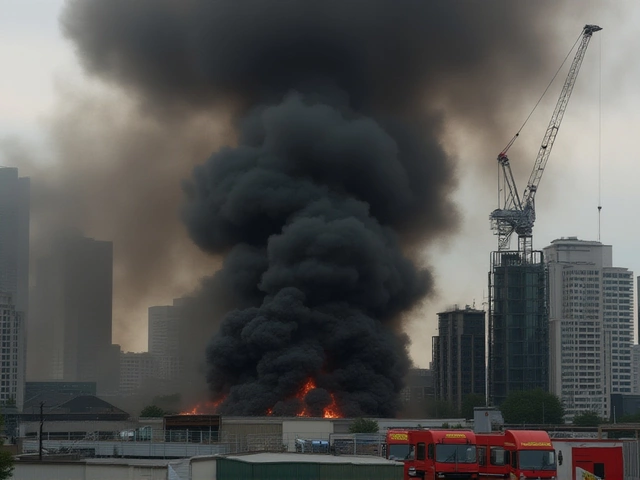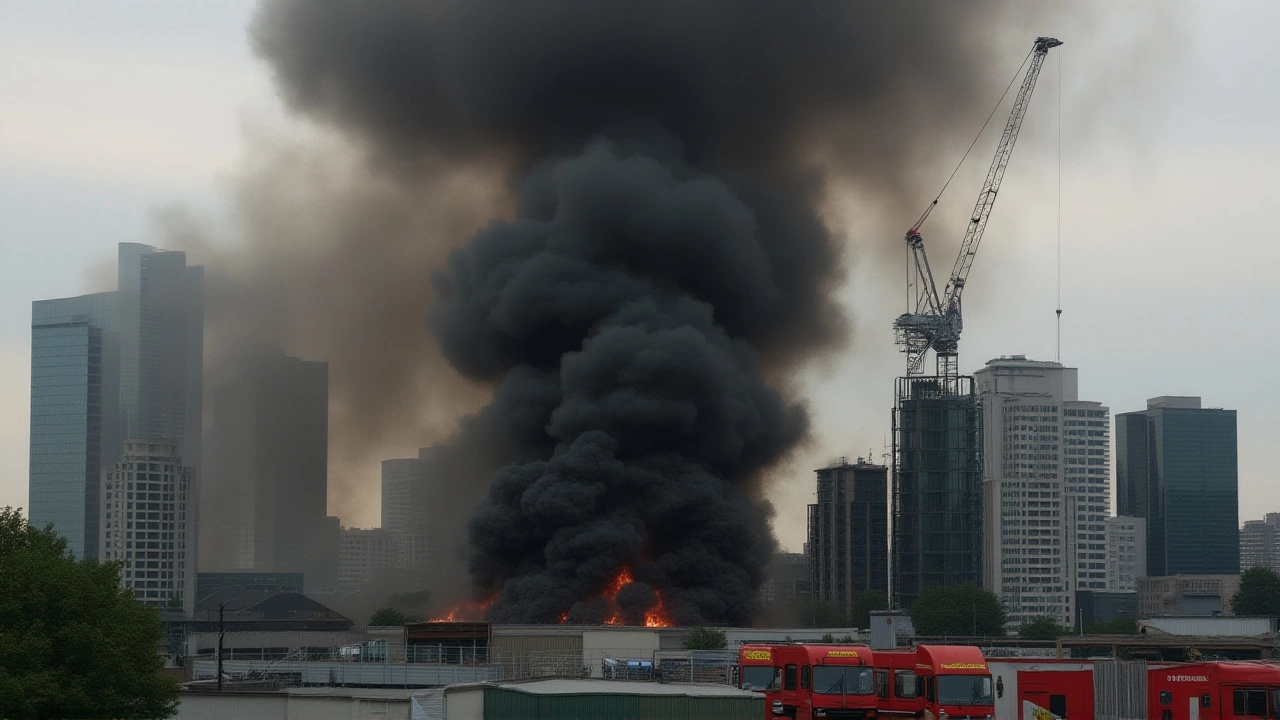
A massive warehouse fire tore through a commercial complex on Bridge Road in Southall, West London, on Tuesday, November 25, 2025, forcing the London Fire Brigade to declare a major incident at 16:33 UK time. Thick, acrid smoke rolled across the skyline, visible for miles, as 25 fire engines—along with dozens of firefighters and specialist units—rushed to the scene. By Wednesday morning, the blaze still burned, its cause unknown, its impact still unfolding. This wasn’t just another warehouse fire. It was one of the largest single-response operations in West London in over a decade.
What Happened on Bridge Road?
The fire broke out in a multi-unit industrial warehouse complex on Bridge Road, a busy commercial artery in the heart of Southall, part of the London Borough of Ealing. Eyewitnesses described a sudden explosion of flames, followed by a wall of smoke that turned daylight into dusk. Drone footage from Sky News showed flames leaping from upper floors, with fire hoses struggling to reach the heart of the blaze. The London Fire Brigade confirmed they had deployed units from as far as Hounslow, Ealing, and Richmond—rare for a single incident. Their statement at 16:33 UTC was blunt: “The cause of the fire is not yet known.”Why 25 Fire Engines? The Scale of the Response
A major incident declaration by the London Fire Brigade isn’t taken lightly. It requires at least 10 fire engines and triggers a coordinated, borough-wide response. This one hit 25—nearly a quarter of the brigade’s available heavy appliances in West London. That’s more than were sent to the 2022 warehouse fire in Hayes, and comparable to the response for the 2019 fire at the former Ford plant in Dagenham. The scale suggests either an unusually large fuel load, multiple compartments burning simultaneously, or hazardous materials involved. No official mention of chemicals was made, but firefighters were seen wearing full Level A protective gear—an indicator that something dangerous may be burning.Smoke, Air Quality, and the Invisible Toll
While no injuries or fatalities have been reported, the environmental impact is undeniable. The smoke plume stretched from Southall to Hounslow and even reached parts of Acton and Ealing Broadway. The London Fire Brigade didn’t issue evacuation orders, but the London Borough of Ealing advised residents with respiratory conditions to stay indoors. Air quality monitors in the area showed PM2.5 levels spiked to 180 µg/m³—well above the WHO’s safe limit of 25 µg/m³. Schools near the fire zone suspended outdoor activities. One mother, speaking anonymously, said: “I could taste the smoke on my tongue. My son’s asthma inhaler was in my hand all afternoon.”Who Owns the Warehouse? The Missing Answers
Here’s the odd part: no one knows who runs the building. Neither CNN-News18 nor Sky News named the warehouse operator, and the London Fire Brigade declined to disclose ownership details. That’s unusual. In London, commercial properties are registered with the London Borough of Ealing’s planning department. Fire safety inspections are mandatory for industrial units. Yet, no public record of recent inspections has surfaced. Is this a case of opaque corporate structures? A shell company? Or simply a gap in oversight? The lack of transparency is as troubling as the fire itself.
What Comes Next? The Investigation and the Fallout
Firefighters remained on site through Wednesday night, dousing hotspots and preventing reignition. The London Fire Brigade confirmed that a full forensic investigation will begin once the site is deemed safe—likely within 48 hours. The London Fire Brigade’s Fire Investigation Unit, which works with the Metropolitan Police and the Health and Safety Executive, will examine structural integrity, electrical systems, and potential ignition sources. Meanwhile, local businesses on Bridge Road reported closures, delivery delays, and lost inventory. One small logistics firm said they lost £2.3 million in goods stored nearby.Historical Context: A Pattern in West London
This isn’t the first time Southall has seen a major industrial fire. In 2017, a warehouse fire on nearby Uxbridge Road destroyed 12 units and forced the evacuation of 300 residents. That blaze was linked to improper storage of flammable solvents. In 2020, another fire at a recycling depot in Ealing led to a £1.2 million fine after inspectors found repeated safety violations. West London’s industrial zones—once the backbone of manufacturing—are now packed with high-density storage units, often operating with minimal oversight. The infrastructure hasn’t kept pace with the growth of e-commerce logistics. What’s needed isn’t just better fire response—it’s smarter regulation.Frequently Asked Questions
Why hasn’t the owner of the warehouse been named yet?
Authorities are withholding ownership details pending the investigation, which is standard procedure to avoid prejudicing legal outcomes. However, the lack of public disclosure raises concerns about transparency. Commercial properties in the London Borough of Ealing are required to register ownership with the council, but many are held through offshore entities or limited companies, making tracing difficult. The council has confirmed it will review all warehouse registrations following this incident.
Could this fire have been prevented?
Possibly. Fire safety regulations in the UK require commercial warehouses to have automatic sprinklers, fire alarms, and clear escape routes. But inspections are often carried out only every two years, and many operators exploit loopholes—like claiming their premises are ‘low-risk’ to avoid upgrades. A 2023 audit by the London Fire Brigade found 37% of industrial units in West London had serious compliance gaps. This warehouse may have been one of them.
How long will the investigation take?
Forensic investigations into large-scale warehouse fires typically take between 8 and 16 weeks. The London Fire Brigade will need to excavate debris, analyze burn patterns, and review any available CCTV footage. If hazardous materials are involved, environmental samples will also be tested. A preliminary report may be released within 30 days, but full findings could take months.
What’s being done about air quality and public health?
The London Borough of Ealing has partnered with Public Health England to monitor PM2.5 levels across Southall and surrounding areas. Air quality sensors are being installed in three schools and two care homes near the fire zone. Health officials are distributing masks to vulnerable residents and offering free respiratory check-ups at local clinics. No long-term health advisories have been issued yet, but experts warn that prolonged exposure to warehouse fire smoke—often containing plastics, adhesives, and synthetic fibers—can lead to chronic lung issues.
Are other warehouses in Southall at risk?
Yes. Southall has over 80 industrial units within a one-mile radius of Bridge Road, many housing similar goods—electronics, textiles, packaging materials. The London Fire Brigade has already launched targeted inspections of 15 high-risk sites, prioritizing those with outdated fire suppression systems. Residents are being urged to report suspicious storage practices. The message is clear: another fire like this shouldn’t wait for a tragedy to trigger action.
What’s the long-term impact on the local economy?
Bridge Road is a key logistics corridor for Southall’s thriving South Asian retail sector. Over 40 small businesses rely on warehouse space nearby for inventory storage and delivery. Initial estimates suggest losses exceeding £5 million in disrupted supply chains and damaged goods. The council is considering emergency grants for affected businesses, but without clear ownership or insurance details, recovery will be slow. This fire isn’t just a building loss—it’s a blow to a community’s economic backbone.